
PLC programming and automation wired, integrated and repaired.
PLC and process automation ties the sensors, switches, instruments, controller, operator screens and machines on a line together so they run one sequence. We install field devices, run process control raceway and cabling, integrate control systems, troubleshoot PLC cabinets and change PLC programs on Allen-Bradley and Siemens platforms for plants across northwest Georgia. Call 706-618-0095 to talk through your process.
Serving northwest Georgia to Atlanta
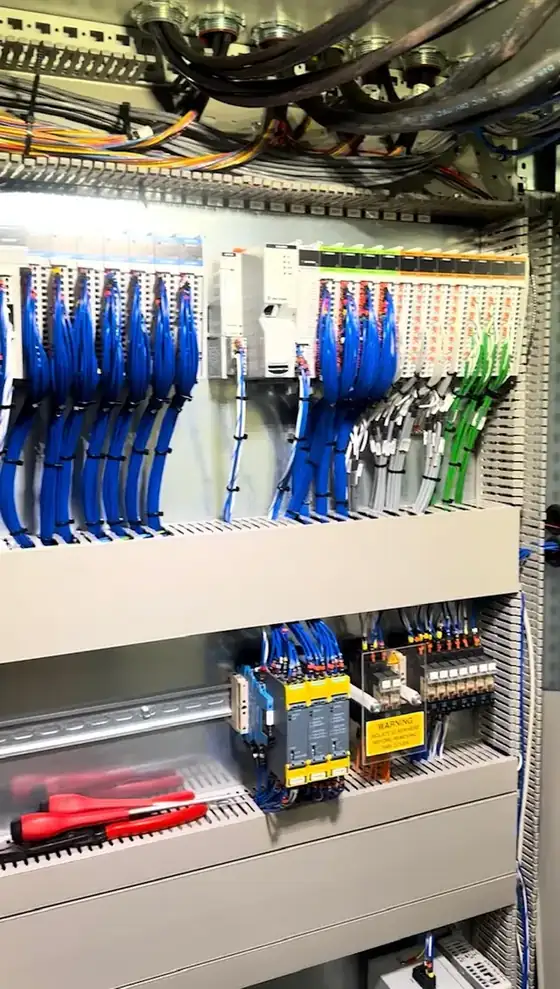
Controls circuits
What our controls work covers
PLC and process automation and control systems integration are both on our industrial list. These are the pieces of that work.
- 01PLC and process automationA programmable logic controller reads inputs from sensors and switches and drives outputs like motors and valves. We install, wire and troubleshoot the systems built around it.
- 03PLC program changesModifying existing PLC programs on Allen-Bradley and Siemens platforms when a sequence changes or a new device is added.
- 05Control systems integrationGetting sensors, PLCs, operator screens, drives and the equipment you already own to pass the right signals to each other.
- 07Field device installationMounting and wiring the sensors, switches and instruments that tell the controller what the process is doing.
- 09Process control raceway and cablingRunning the raceway and cable that carry signals and communications between the floor and the controls.
- 11PLC troubleshooting and repairFollowing a signal from the device, through the controller, to the output, to find whether the fault is a device, the wiring or the controls.
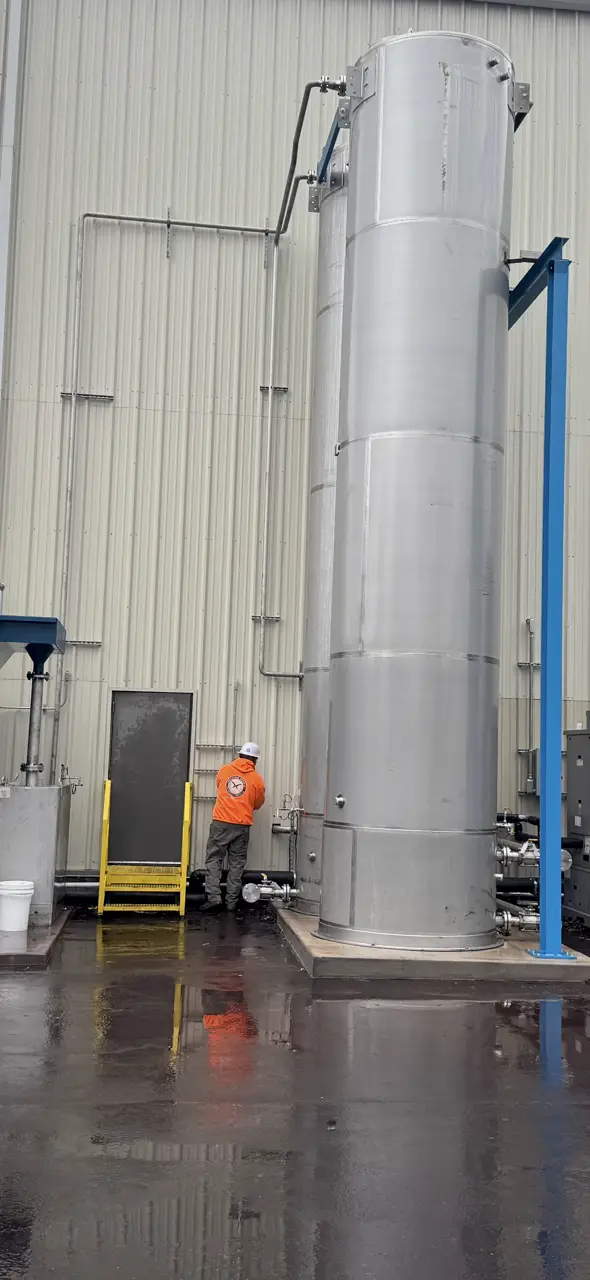
- 13Silo and process controlsControls for process equipment such as silos, where level and position signals decide what runs next.
How we approach it
Start with the process, not the hardware
Eric's advice on automation starts before any equipment is chosen: find the tasks that are repetitive, slow or error-prone, and decide what you want to change, whether that is less energy use, faster production or a safer job. Then pick technology that fits, such as PLCs and smart sensors. He wrote about it in Boost Efficiency with Advanced Automation Solutions.
On the floor, the work is as physical as it is logical. Field devices have to be mounted where they read the process reliably. Raceway and cabling have to carry signals cleanly back to the cabinet. The PLC, operator screens and drives have to be connected so the sequence runs the way it was meant to.
When a sequence stops, we troubleshoot it in order: is the input arriving, is the controller seeing it, is the output being commanded, and is the equipment responding? That separates a bad sensor or a broken wire from a control problem, so the fix lands in the right place.
When to call
When your process needs controls work
A task is done by hand every cycle
Repetitive manual steps are the usual starting point for automation. Know the result you want, then we can talk through the devices, wiring and controls it involves.
A sequence stops and nobody knows why
Often the controller is waiting on an input that never arrives. Note where it stops and any message on the screen.
Old and new equipment need to talk
Integration depends on the signals and interfaces each machine has. We check what is there before planning the connection.
Sensor readings do not match reality
The device, its mounting, the wiring or the setup can all cause it. Write down the reading and what the process was actually doing.
A silo or process sequence is changing
Changing how material moves or how levels are watched usually means new or moved field devices and wiring. Tell us what is changing.
New field devices are going in
Sensors, switches and instruments need mounting, cabling and a clean connection back to the controls.
What to expect
From the problem to a running sequence
Describe the process
Call with the process and what you want it to do, or exactly where the current sequence fails.
We trace the system
We go over the sequence with you and look at the controller, operator screen, field devices and whatever documentation exists.
We wire it and check it
We do the agreed wiring, device, integration or repair work, then check that signals reach the controller and the equipment responds the way the process should run.
We walk your team through it
We go over what changed with the people who run it. Eric's advice still applies: train your team, then keep monitoring and adjusting.
Before you call
What to have ready when you call
Controls problems are much easier to scope with a few facts in hand.
- A plain description of the sequence as it runs now, and what you want changed
- The repetitive task or recurring fault you are trying to fix
- Controller, operator screen and drive make and model, if known
- Electrical drawings, device lists and program documentation, if you have them
- Fault messages, and the step where the sequence stops
- Sensor readings at the moment the problem happens
Questions
Straight answers
Do we need a new PLC to automate a task?
Not always. It depends on the task, the existing controls and how much spare capacity the current controller has. Start by defining the sequence, the inputs and the outputs. Walk us through it and we will tell you which part of that is our work.
Can you connect sensors, an operator screen and our existing machines?
That is control systems integration, and it is on our service list along with field device installation. It means checking the signals and interfaces each piece has, then wiring and connecting them so the controller can run the sequence.
Does a stopped sequence mean the PLC program is wrong?
Not necessarily. The controller may be waiting on a sensor, a switch or an equipment status that never arrives. We follow the signals first, and only then decide whether the device, the wiring or the control side needs the fix.
Can you change our PLC program?
Yes. We modify existing PLC programs on Allen-Bradley and Siemens platforms. Tell us the platform, what the sequence does now and what you need it to do, and send the program documentation if you have it.
Other circuits
Related work
Contact
Process acting up? Call us.
Free estimates
Get a free estimate.
Estimates and second opinions are free. Tell us what you need and where, and we will call or email you back. If it is urgent, call 706-618-0095.
Request sent
Thanks. We have your request.
We will call or email you back. If it is urgent, call 706-618-0095.